

Orchestral saturation glue
Aureate
Gild the orchestra — tape and console saturation glue for strings, brass and layers.
AU · VST3 · Standalone · macOS & Windows · AGPL-3.0
About
A tape/console saturation "glue" plugin for orchestral material — strings, brass, and layered tracks that need cohesion and analog warmth without sounding like a guitar pedal. A 4×-oversampled, character-selectable saturator meets tape-transport artefacts and a console-style tilt EQ.
Why the name?
Aureate: gilded. Gold leaf never changes what an altar is made of — it makes it glow. Aureate's tape and console saturation does the same to strings, brass and busses: the material stays, the surface warms.
Under the hood
A feedback glue law with two circuit classes. One mono-summed sidechain, and a detector that sees the signal after the gain cell, one sample old. VCA is a dB-domain timing network in that loop — the knee, the ratio-dependent attack (63% at τ/(1+k): measured 4.96 / 2.46 / 0.98 ms at the 10 ms position for 2:1 / 4:1 / 10:1) and the program dependence are consequences of the topology, not features bolted on top. Vari-Mu swaps in a softplus dead-zone sidechain, a current-limited rectifier, a trapezoidally-discretised three-capacitor release network and a gain cell derived from the analytic transconductance of a published triode law. Its attack is a genuine slew, and the test proves it the hard way: peak d(GR)/dt grows only 1.22× when the step size doubles, against 2.00× for the VCA law's exponential — a bound no exponential can satisfy at any time constant.
An Auto release that remembers, without measuring anything. The slow reservoir capacitor is only ever charged by release-phase ripple, so sustained programme fills it and a lone transient does not. A 50 ms peak is forgotten in 0.28 s; ten seconds of sustained gain reduction takes 2.37 s — 8.3× longer — with a tail that never bounces. The release switch's printed markings are nominal, by design: measured circuit-class timing runs longer than the label at every position, and the manual states the real numbers rather than the print.
Iron: a transformer stage where the low end is Faraday's law, not an EQ curve. Integrate to flux, saturate the core, differentiate back. Because flux is the integral of the signal, the core saturates far harder at low frequencies for the same level, and third-harmonic content rises steeply toward the bottom end on its own — measured at roughly 10 dB per octave, with no coefficient anywhere fitted to produce it. The integrator/differentiator pair is backward-Euler matched, not bilinear, because the bilinear inverse carries an undamped pole at Nyquist that a transient would park forever; the shipped pair is a pure one-zero FIR that decays to true zero, verified after ten seconds of silence.
HQ: a lower alias floor, and the same voicing. First-order antiderivative anti-aliasing on the same three Character curves, in the same oversampled region, at the same reported latency. Measured 24 dB lower non-harmonic floor on every Character at 10 kHz / 0 dBFS / 24 dB Drive — while the audible harmonic structure stays within ±1 dB of Classic and the low-drive magnitude response within 0.1 dB to 5 kHz. The antiderivatives are verified against their curves before a single aliasing number is claimed. HQ carries an inherent half-sample delay at the rate it runs at internally — far below the reported-latency's integer granularity and inaudible — so it is an alias-floor option, not a re-voicing.
Proof, not adjectives. 152 tests in Release on macOS and Windows, plus strictness-10 format validation on both and AU validation on macOS. Zero heap allocations on the audio thread, under an instrumented allocator, with every new path hot. Bit-identical output at block sizes 1, 513 and 4096. Identical timing in absolute seconds from 44.1 to 192 kHz. Factory presets pinned by SHA-256. Zero subnormal samples after ten seconds of silence.
Stays out of the way until you ask. Every new control is neutral by default, and each neutral default is a branch-skip rather than a transparent setting — the Glue section returns before touching a sample, the Iron stage is stepped over, Classic quality still runs the previous release's own code. An existing session plays back bit-identically, with reported latency unchanged at every setting and every sample rate.
Features
- Character — Tape / Console / Valve saturator transfer-function families, 4× oversampled
- Warmth — saturator asymmetry plus a gentle tape-style pre-clip HF rolloff in one knob
- Bias — independent saturator asymmetry trim on top of Warmth
- Wow & Flutter — independent slow/fast tape-transport speed instability (v0.2.0 splits these into two controls), off by default
- Hiss — shaped tape-noise floor mixed into the wet path, off by default
- Tone — console-style tilt EQ, plus independent HF/LF trim shelves (±6 dB)
- Mix — delay-compensated dry/wet; 0% is a sample-accurate passthrough
- Full latency reporting for host plugin-delay compensation
- Glue — program-dependent bus compressor ahead of Drive, in a VCA law or a Vari-Mu law with a soft knee and an intrinsic attack; Auto release, sidechain high-pass, off by default (v0.3.0)
- Iron — flux-domain output-transformer stage inside the oversampled region, where third-harmonic distortion rises toward the bottom end the way a real bus transformer measures (v0.3.0)
- Quality — Classic is v0.2.1's exact saturator maths; HQ adds antiderivative anti-aliasing at the same latency and voicing (v0.3.0)
- Auto Gain — compensates most of the level Drive adds on the wet path, so A/B-ing Drive compares character rather than loudness (v0.3.0)
- Factory presets & preset management — browse/save/import/export via the in-plugin preset bar
Download
The latest builds are published on GitHub Releases.
The macOS binaries are Developer-ID-signed, notarised by Apple and stapled — they install and open without Gatekeeper warnings. Windows builds are not yet Authenticode-signed; SmartScreen may warn about an unknown publisher.
Compatible DAWs







Any modern DAW that supports VST3 or Audio Units. Pro Tools (AAX) is currently not supported.
Screenshots
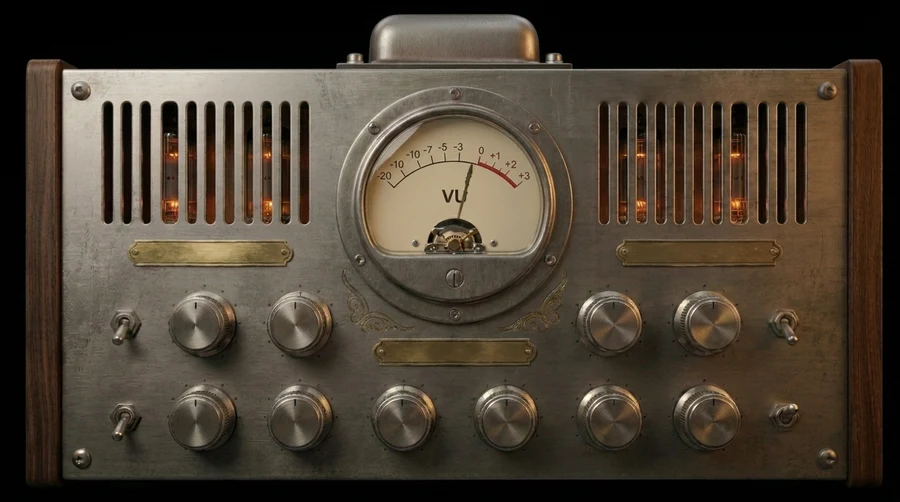
Audio examples
Coming with the next release.
Before/after clips are being recorded — audio examples will appear here with an upcoming release.
Support development
Basilica Audio is free software, built at night and tuned by ear. If it earns a place in your session, you can help keep the candles lit.
Donation links are not wired up yet — they will go live soon.